Scottish Heavy Athletics
- Bryan McClain Memorial Athletic Field

We love new throwers, but this field is too small for inexperienced athletes. If you are interested in throwing, please check out all of the information at www.heavyevents.com and post on the Message Board. We will work to find someone in your area that you can train with.

Thank you to our sponsors
.jpg "image title")
Trophies
The Allie McConnell Memorial Award by COL & Mrs. Frank McConnellThe Bryan McClain Memorial Award by Virginia Scottish GamesThe Liesel Award by Alexandra Lee DuncanIn honor of Malcolm Matheson III, by Clan Matheson and Clan MacRae
By Fauquier Scottish Heritage Society
Medal Sets
- By Nesbitt/Nisbet Society of North America
- In honor of Clark R. Scott, by COSCA
- In honor of James Lawrence Patterson, by Robin Crabtree
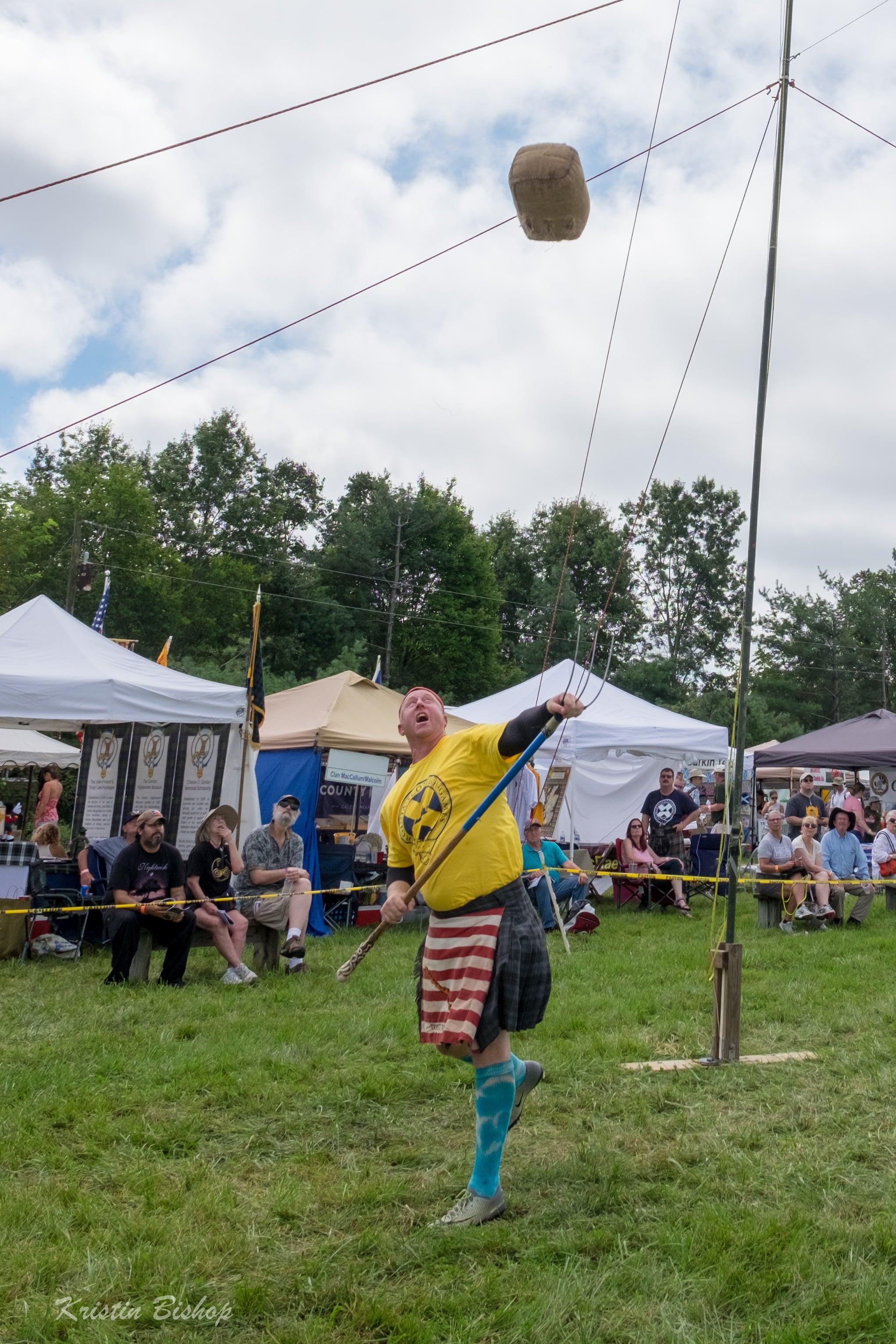
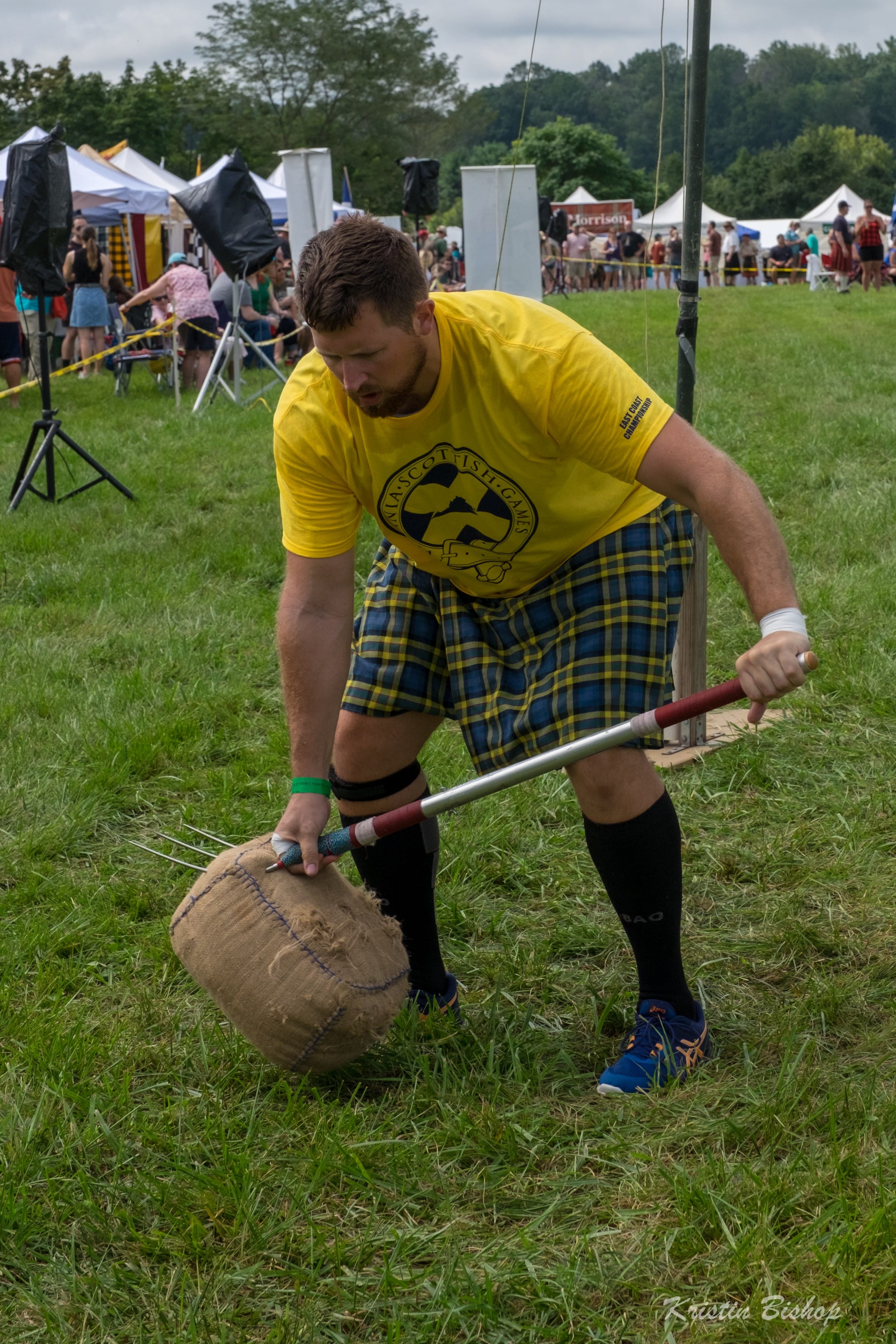
Sheaf Toss
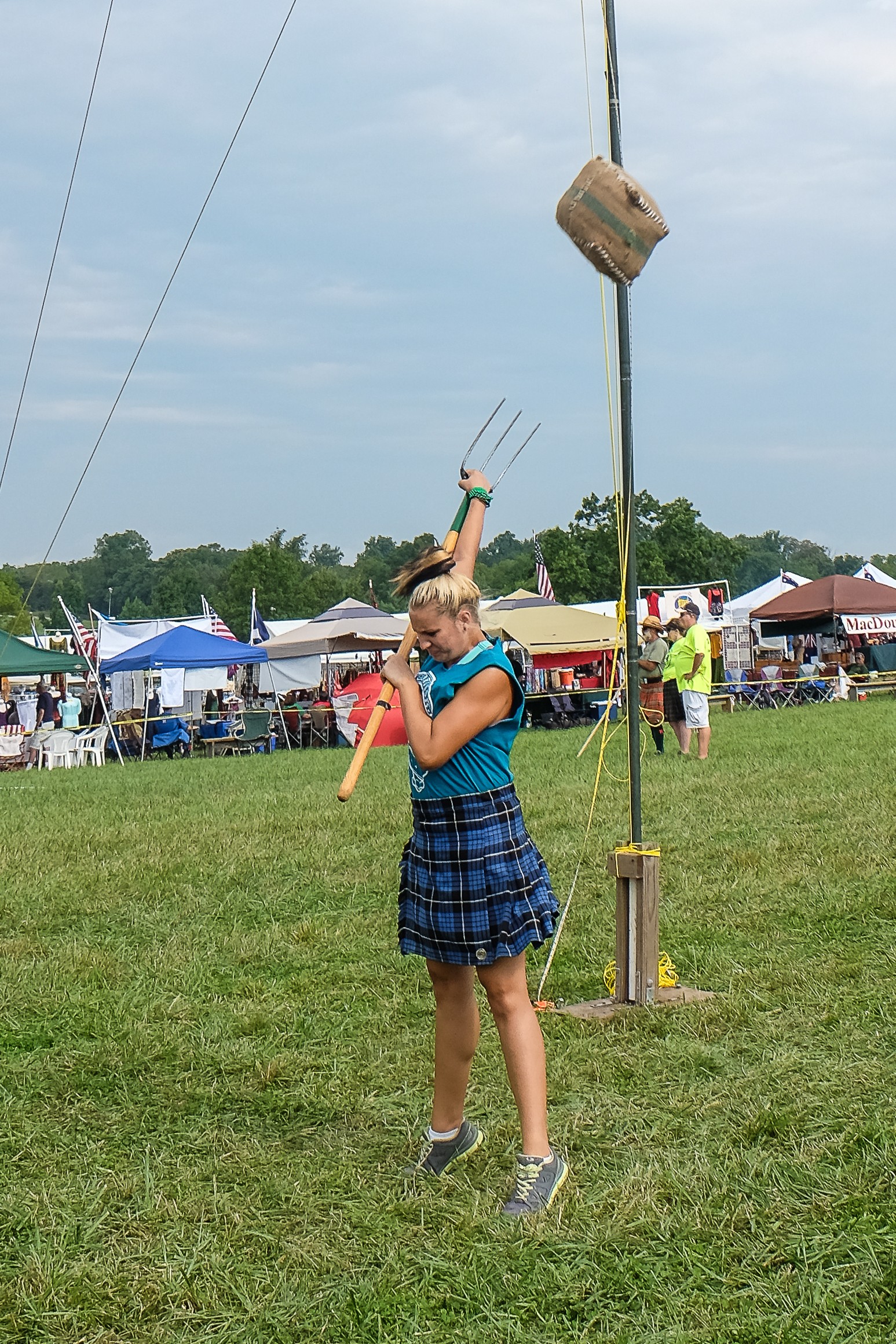
Nolan Killian, amateur light weight athlete, getting ready to throw the 16# sheaf. Professional men throw a 20# sheaf, amateur men a 16# sheaf, and women a 10# sheaf.,Heavy Hammer
Canadian women's thrower, Jen Marych, throwing the heavy hammer. Men throw the 22# heavy hammer and women throw the #16 heavy hammer. Light hammers (16# and 12# repseoctively) are also thrown on larger fields.Weight for Distance
Women's athlete Heather McKenzie Haddock throwing heavy weight for distance. Athletes throw both heavy and light weights. Men 56# and 28#, men over 40 42# and 28#, women 28# and #14, and women over 40 21# and 14# respectively.Weight over Bar
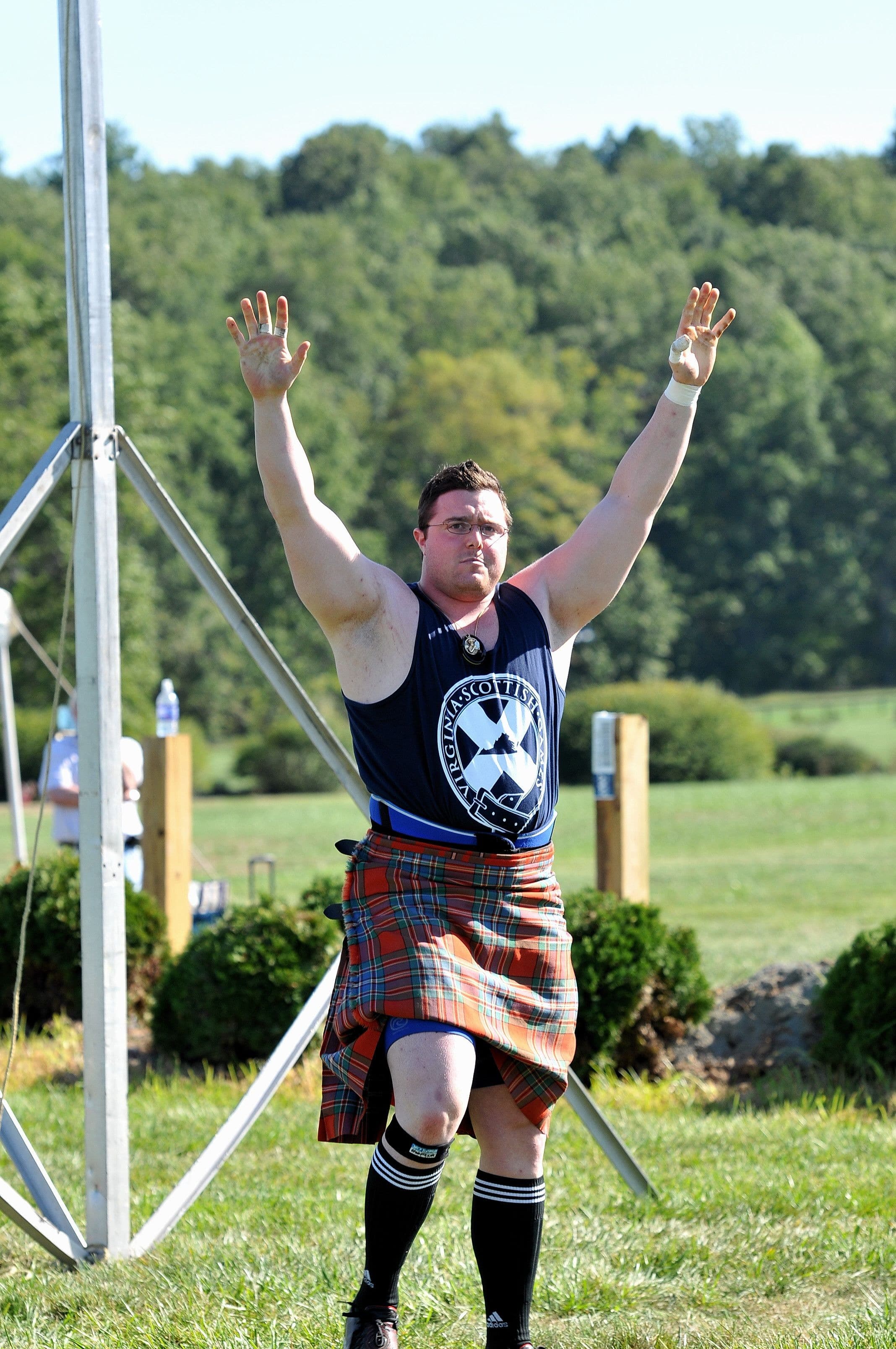
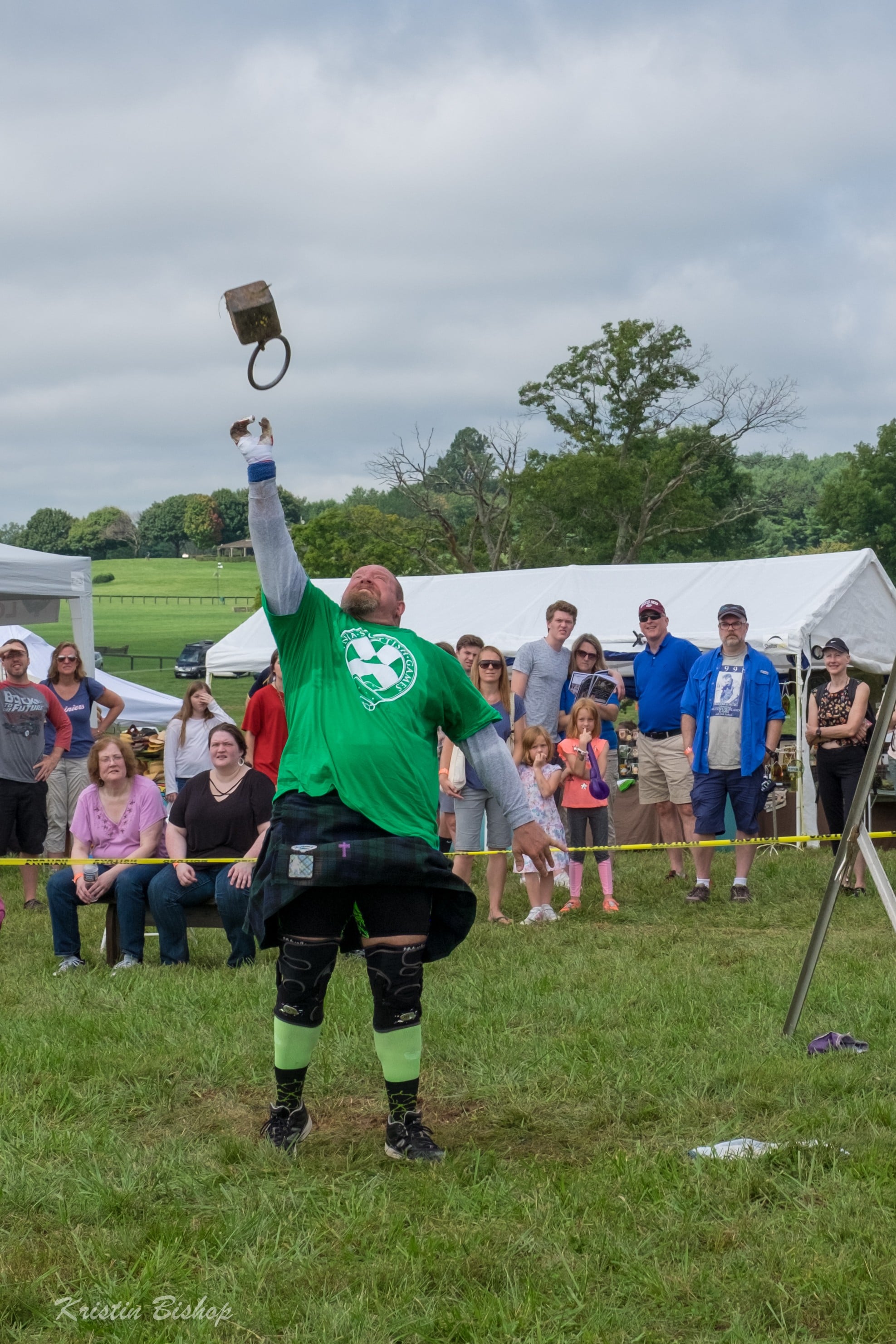
Professional athlete Braidy Miller throwing the Weight over Bar. Men throw the 56# weight, men over 40 the 42# weight, women the 28# weight and women over 40 the 21# weight.Stones
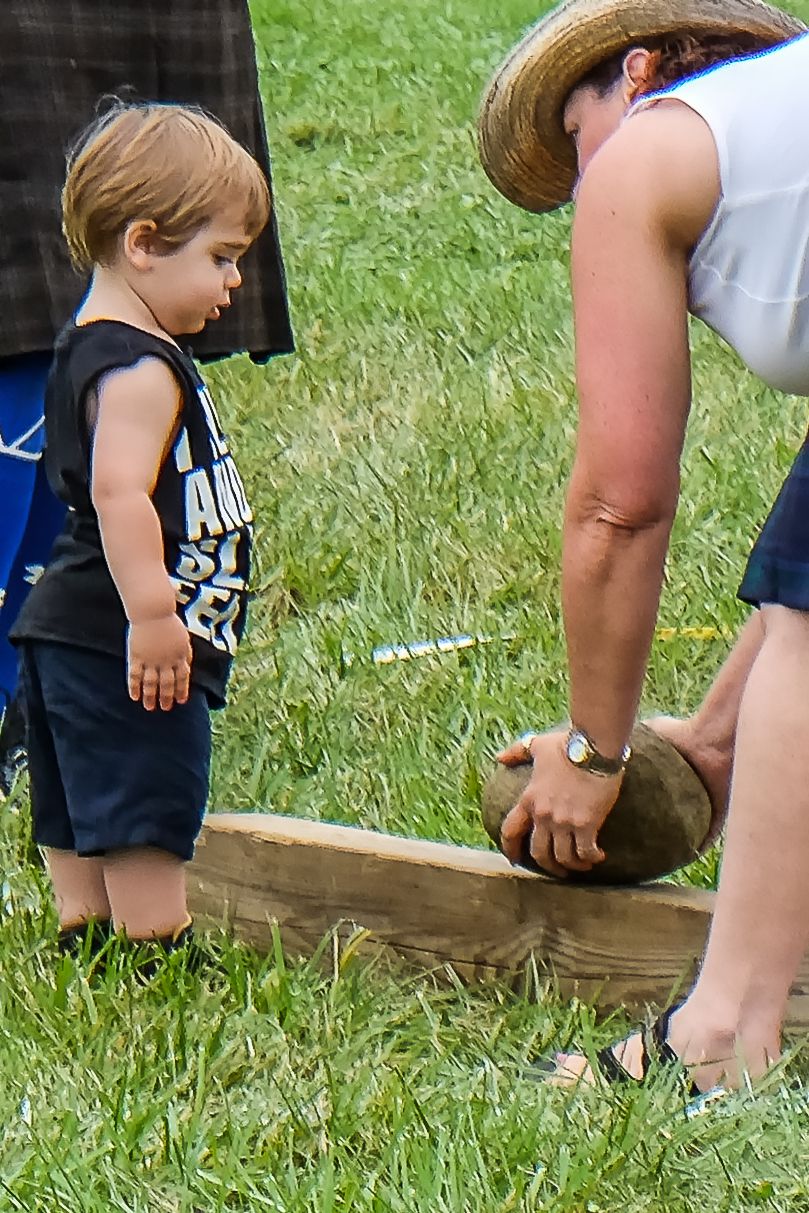
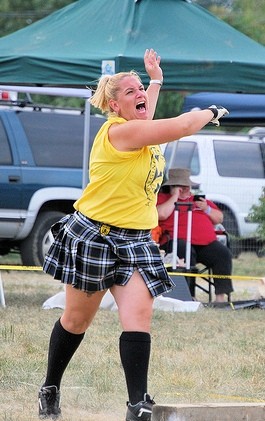
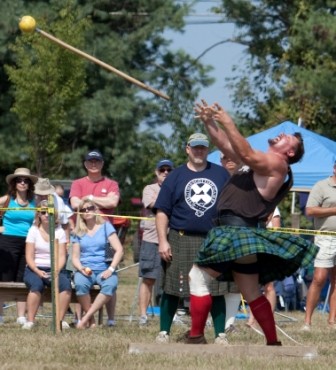
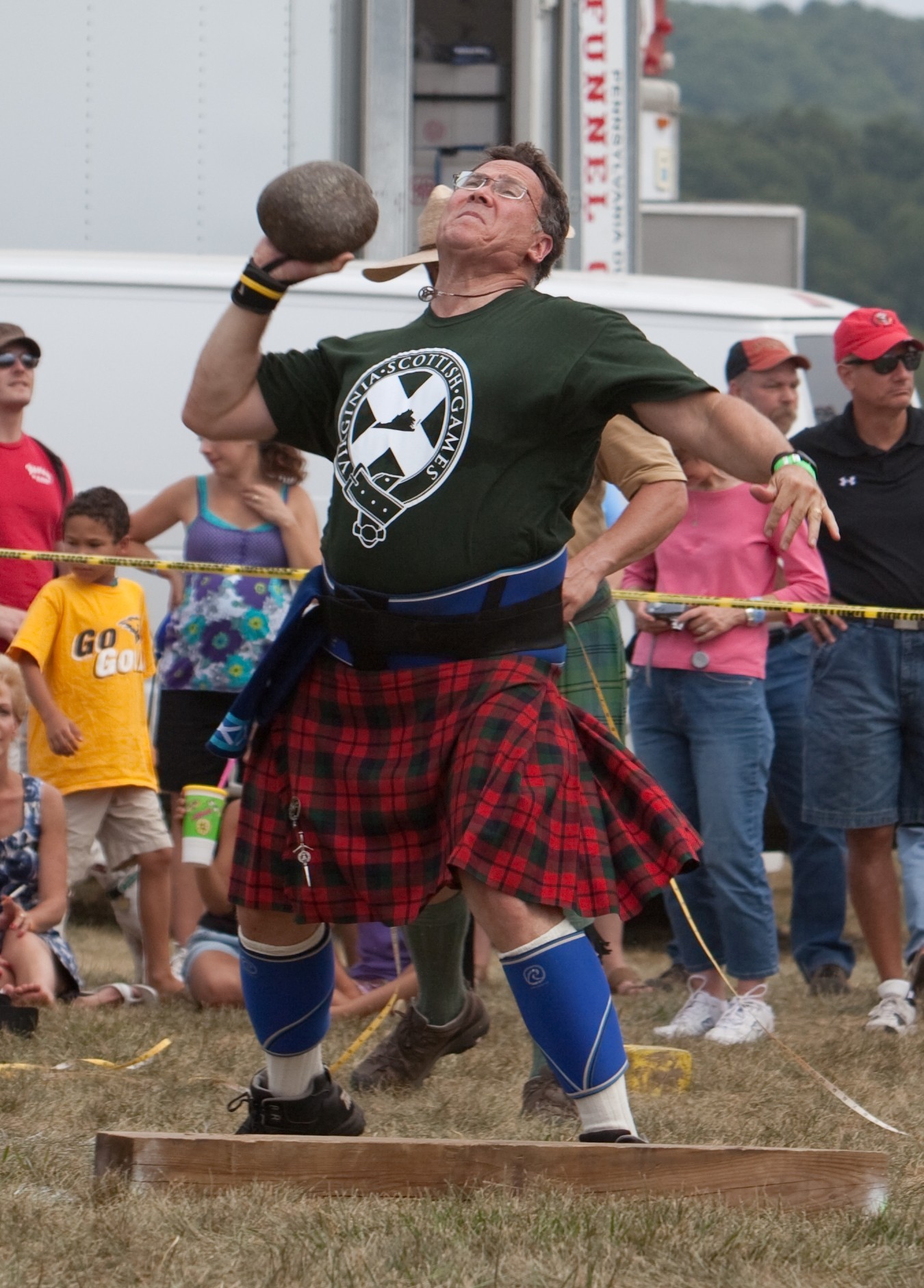
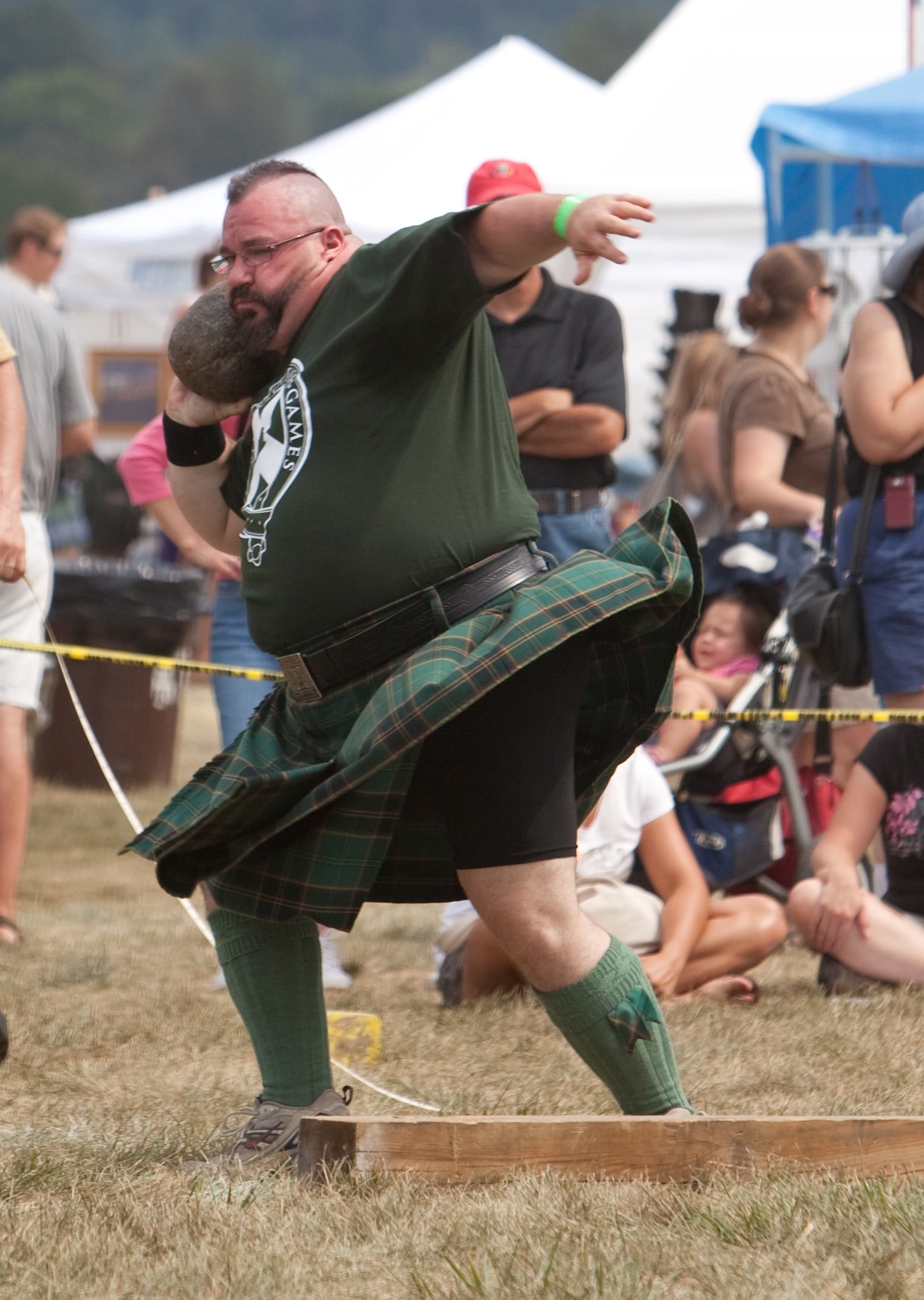
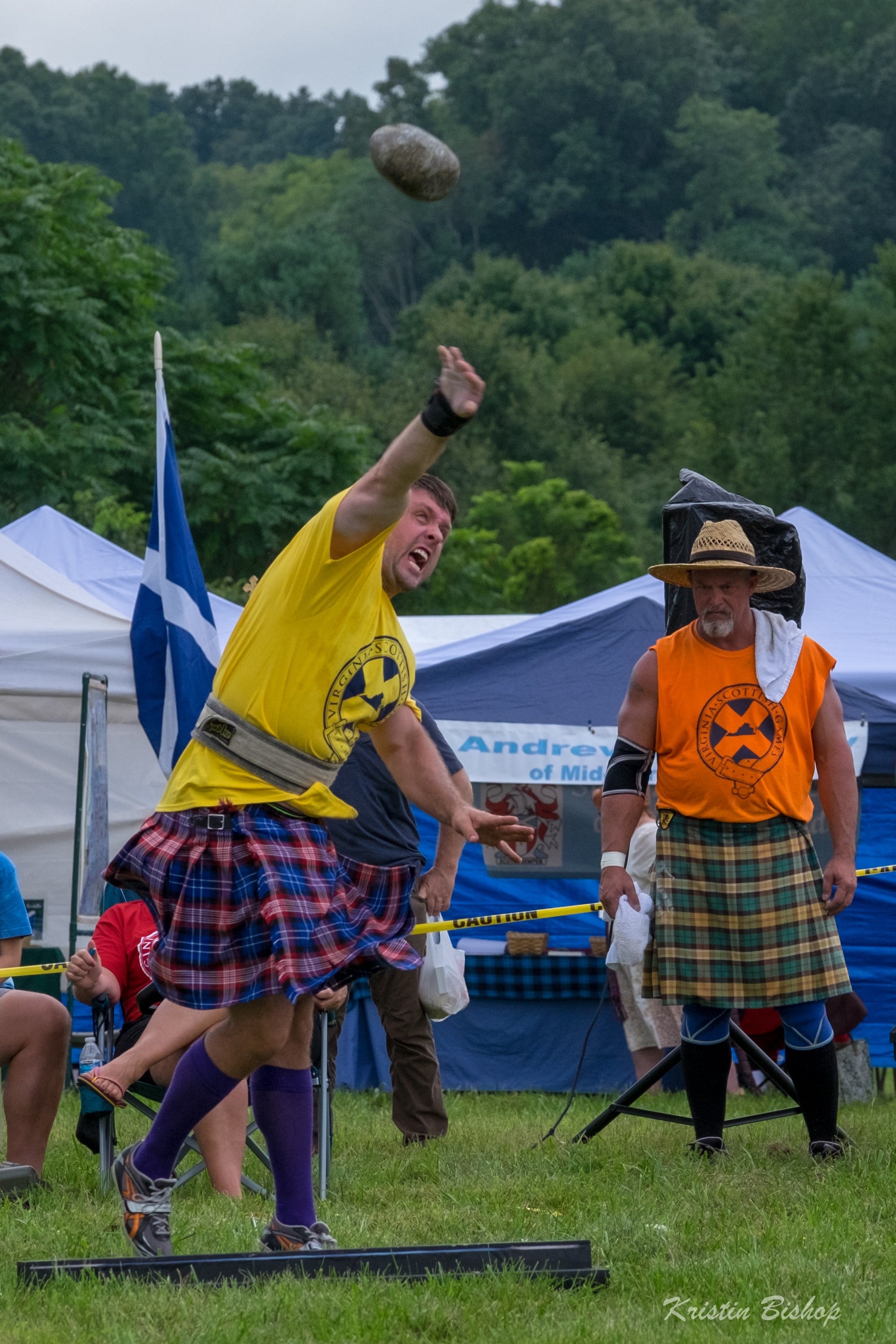
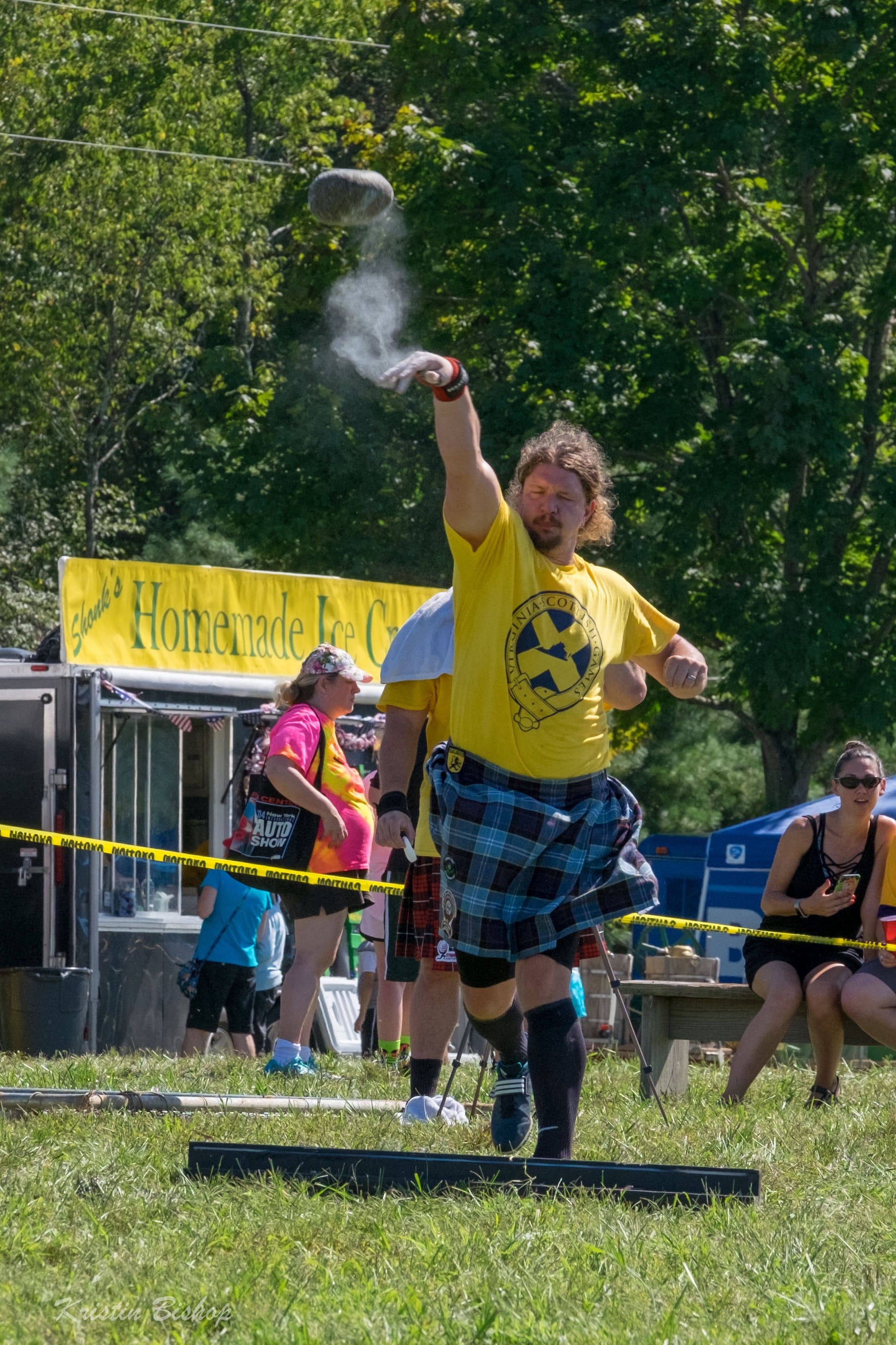
Master women's thrower Bonnie Hicks throws the Braemar Stone. The Braemar is thrown without an approach and can be up to 28# for the men. The Open Stone can be thrown with an approach and is a lighter stone, approximately 16# for the men and 13# for the women.
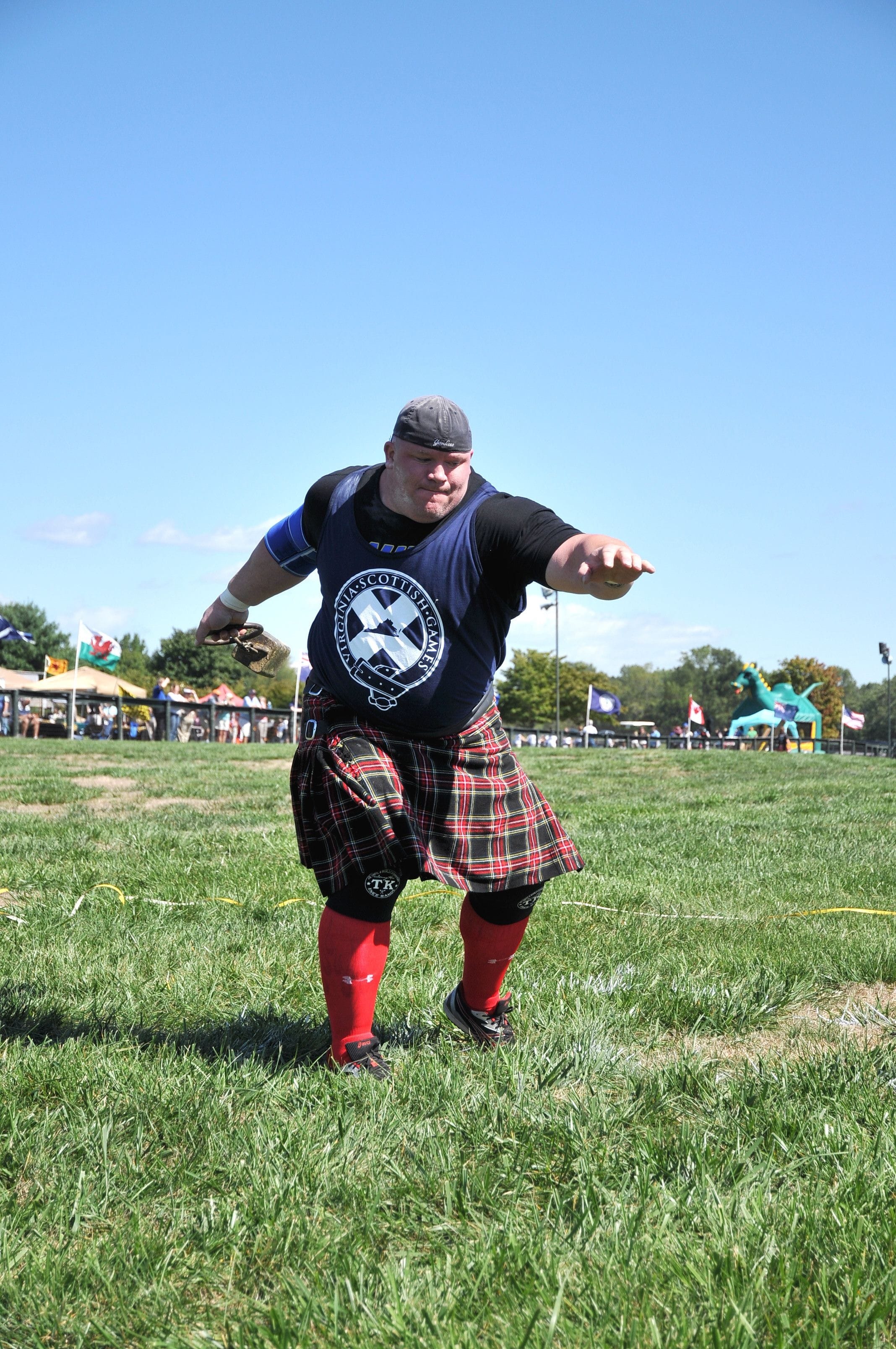

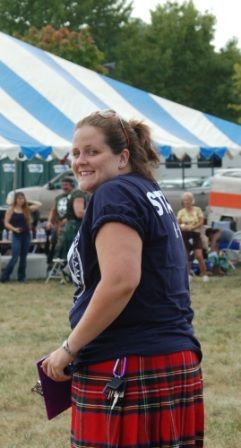

.jpg "image title")
.jpg "image title")
Saturday
8:30 Registration of Open Athletes
9:00 Open Men's Competition begins
9:00 Registration of Professional Athletes
9:30 Professional Competition begins
Sunday
9:00 Registration of Athletes9:30 Athletic Competitions begin
Braemar Stone TossThe Braemar Stone Toss is named for the ancient festival held in Braemar, Scotland, that requires that a heavy stone be put from a standing position, creating a test that relies as much on strength as technique. The Braemar stone, weighing between 22 and 28 pounds, is thrown from a stand. The athlete cannot use a run-up approach or spin; instead, both feet must remain stationary until the stone is released. The athlete must not go past the wooden trig (a toe board that marks the backline and frontline) or touch the ground with any part of his body other than his feet.
Open Stone TossThe "clachneart," or stone toss, is one of the world's most ancient tests of strength. The challenge has always been simple: See who can throw a sizeable creek stone the farthest. The Open Stone Toss developed into today's track and field shot put event. The Open Stone Toss allows a run-up or spinning approach, with the stone usually weighing between 16 and 18 pounds. The contestant must keep at least one foot within the sidelines of the 4'6" wide and 7'6" deep throwing box at all times. The trig cannot be crossed at any time during the throw.
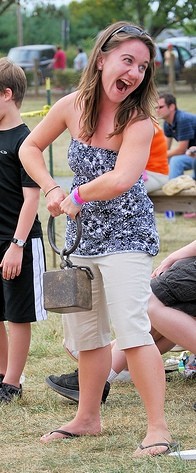
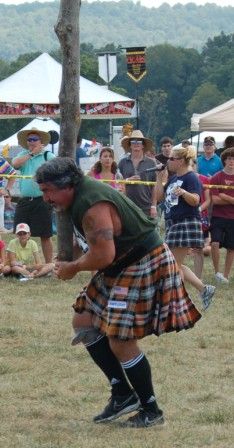
Heavy Weight for DistanceIn Scotland, the traditional measure of weight is a "stone," which equals 14 pounds. Block weights weighing two stones (28 lbs.) and four stones (56 lbs.) were used to balance scales for measuring grain. These weights were thrown by locals gathering around the grain store to determine who was the strongest man in the village. The contestant must keep at least one foot within the sidelines of the 4'6" wide and 9' deep throwing box at all times. The backline and frontline - marked by the toe board called a "trig" - cannot be crossed at any time during the throw.
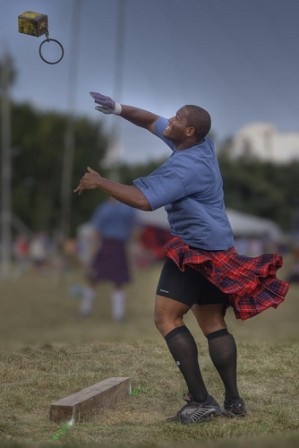
Light Weight for DistanceDrawing from the same roots as the Heavy Weight, the two-stone Light Weight is 28 pounds and was originally used to measure out grain. The modern track and field 35 lb. weight throw is derived from Highland Games weight tosses. The contestant must keep at least one foot within the sidelines of the 4'6" wide and 9' deep throwing box at all times. The trig cannot be crossed at any time during the throw.
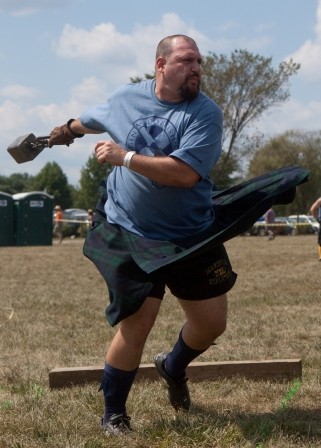
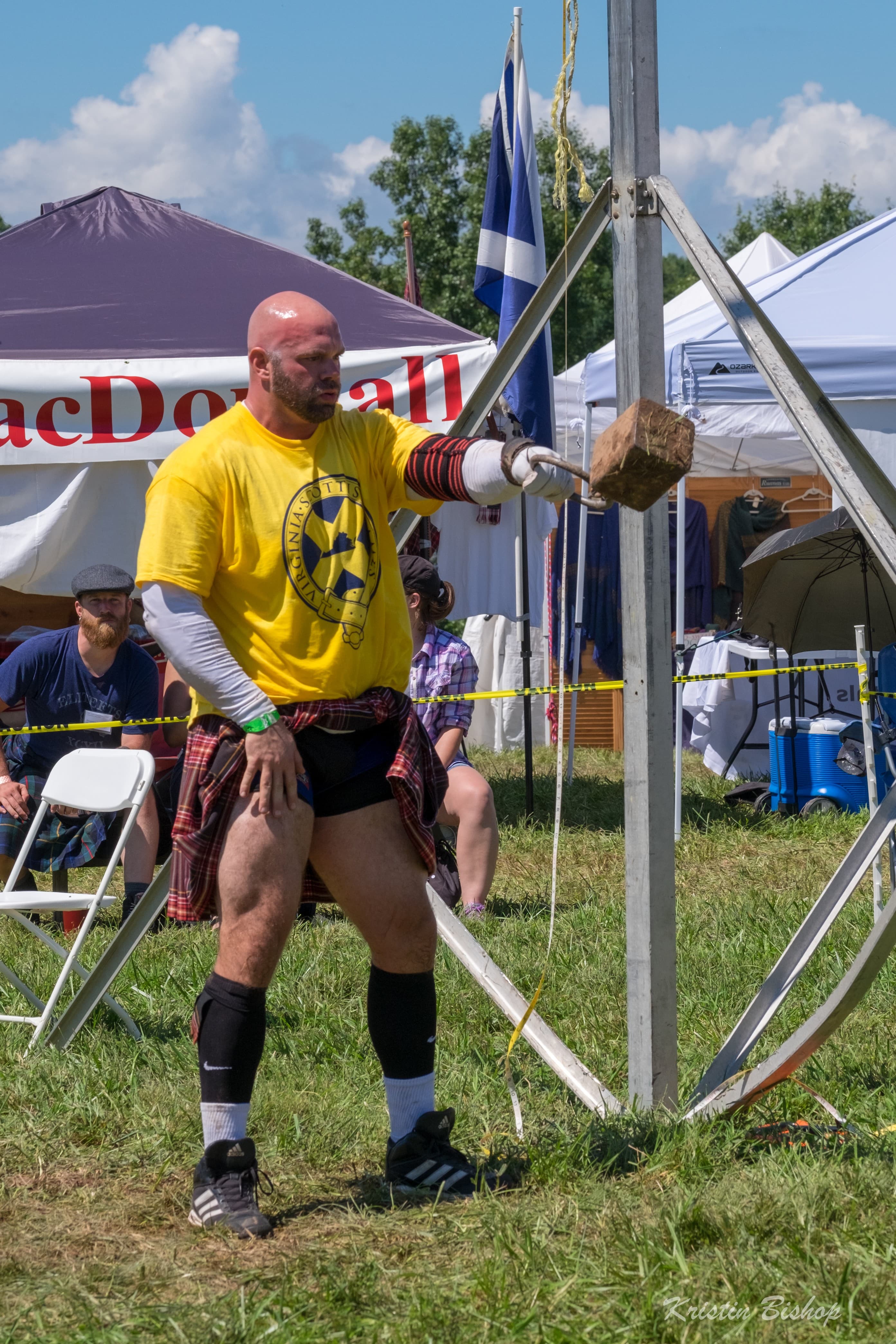
Heavy Hammer Throw Throwing the massive rock quarryman's hammer is a test of strength developed hundreds of years ago. Being even larger than the blacksmith's hammer, the 22 lb. heavy hammer remains an event unique to the Highland Games. The athletes will throw the hammer with their feet remaining stationary, aided by metal spikes that are mounted to the bottoms of their boots and jammed into the ground. The thrower must remain behind the trig, avoid falling over and touching the ground, and keep both feet firmly planted until the hammer has been released.
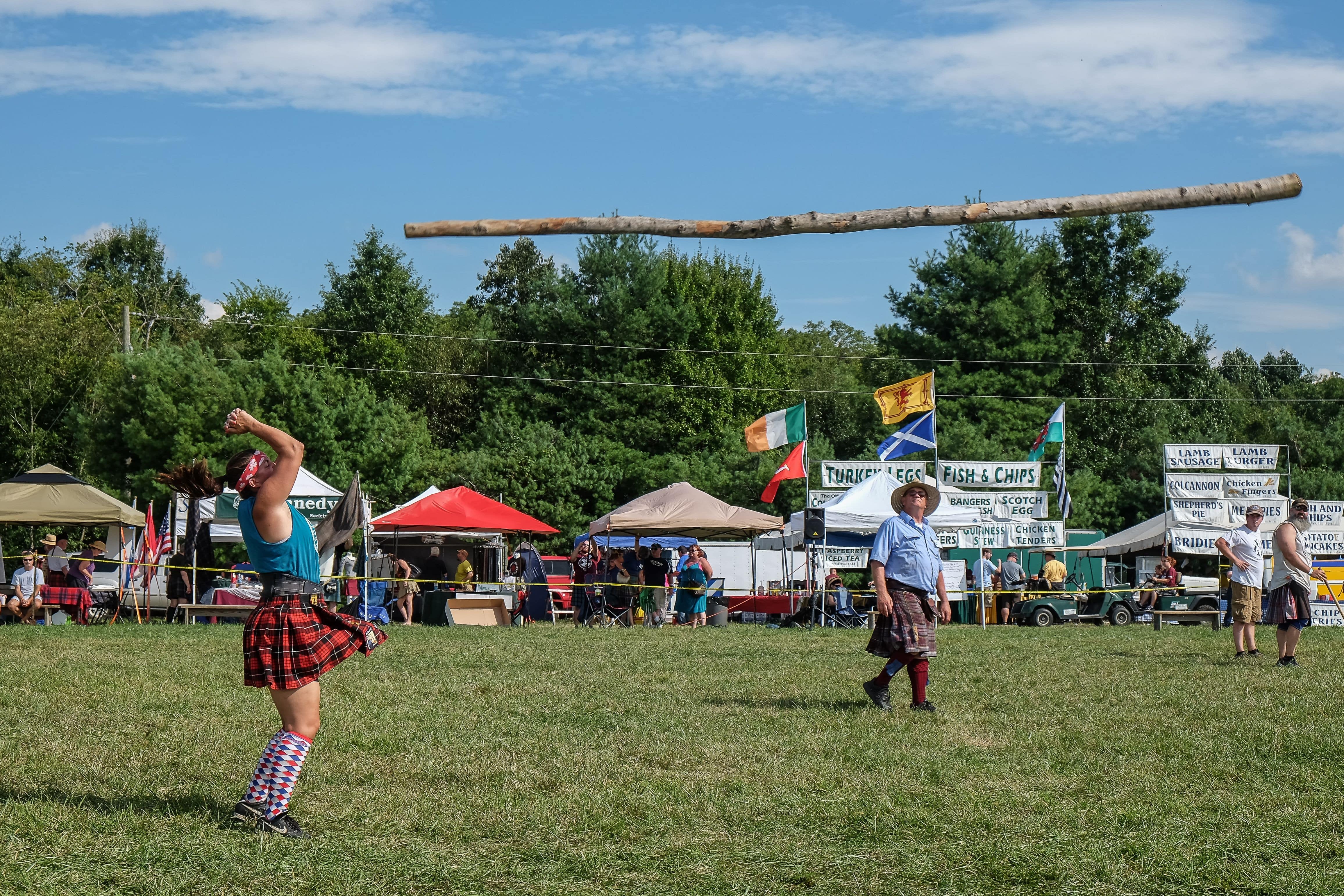
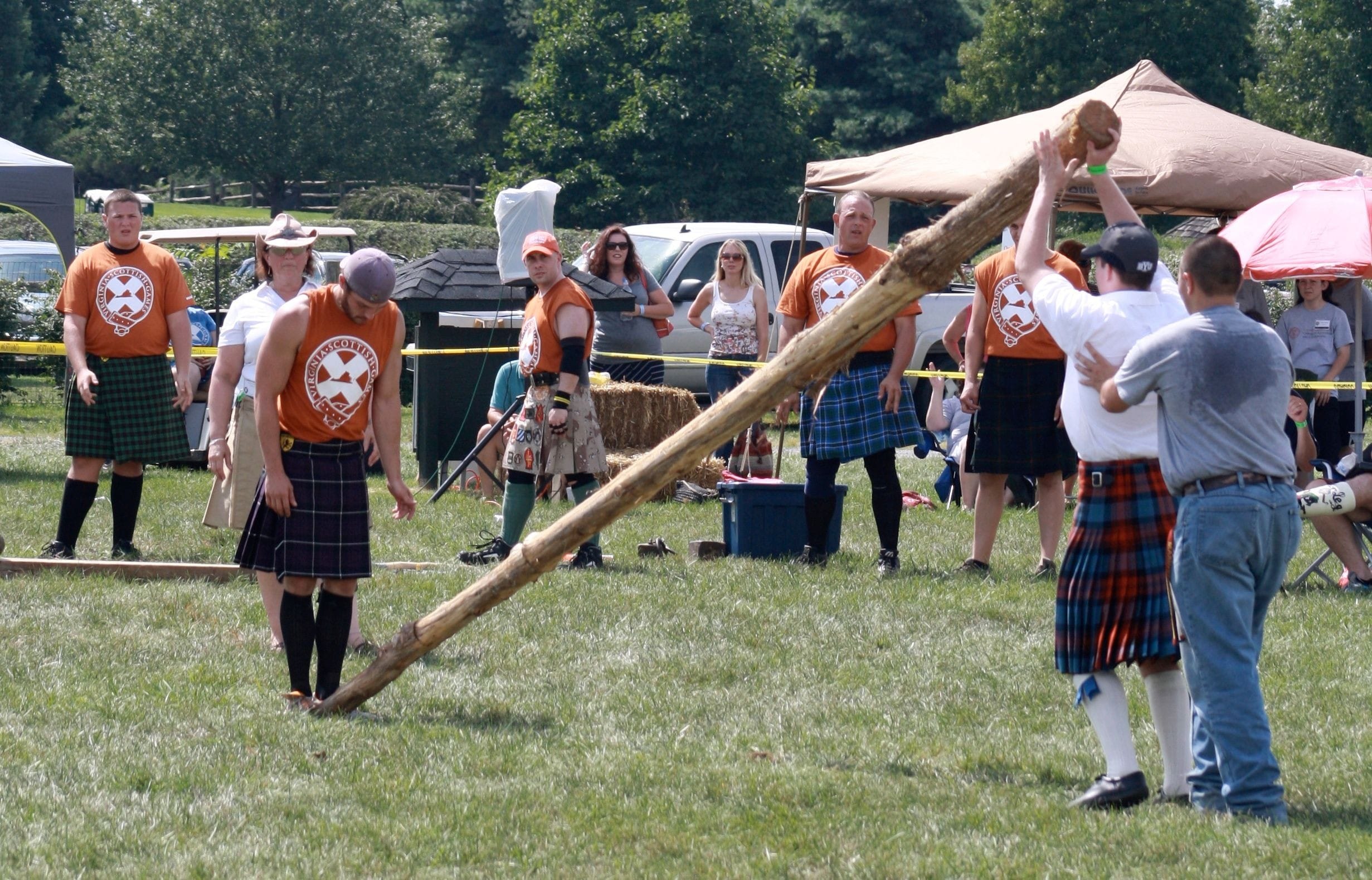
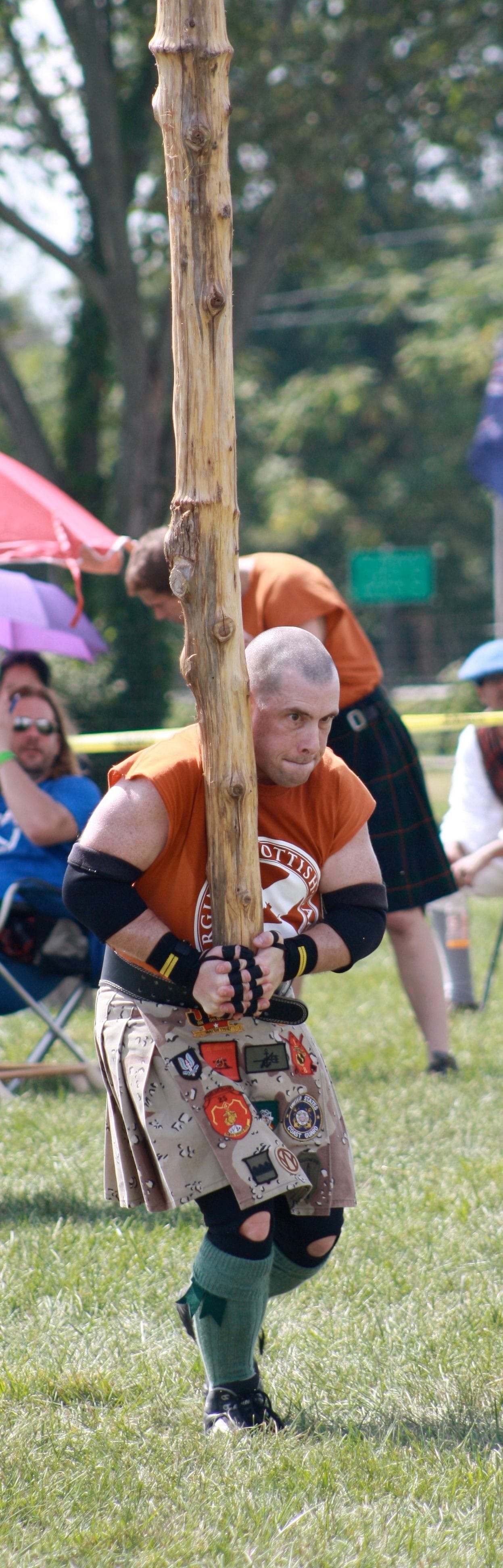
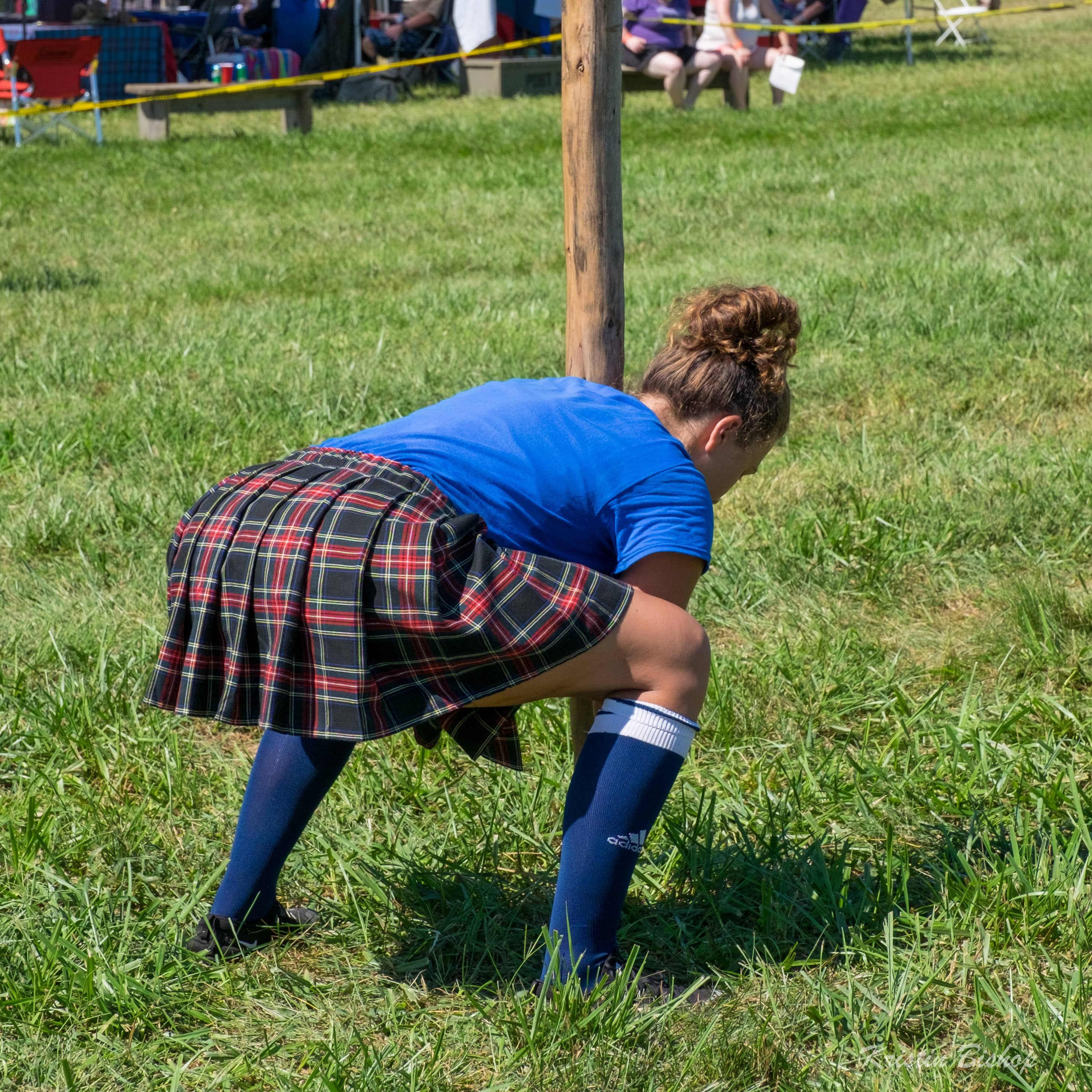
Caber TossThe caber toss draws upon the distant past to establish this test of strength and skill as the king of Highland Games Heavy Events. Caber is Gaelic for tree, and lumberjacks are believed to provide the origin by turning small trees end-over-end to cross small rivers. Soon, attacking warriors started landing 20' tree trunks against castle walls during siege, using them as crude ladders. The Caber Toss is the only event that isn't measured for height or distance. Instead, judges score the event in a subjective manner. A perfect score occurs when an athlete is able to turn the caber end-over-end, with the caber landing in line with the athlete's direction of momentum, resulting in a 12:00 score on an imaginary clock face. If the caber turns, but does not land straight in front of the athlete, scores between 9:00 and 3:00 are assigned. If the caber does not turn, the side judge awards a degree score up to 90°. Due to its subjective nature, and the fact that almost every competition provides a different caber, there are no records, only bragging rights.
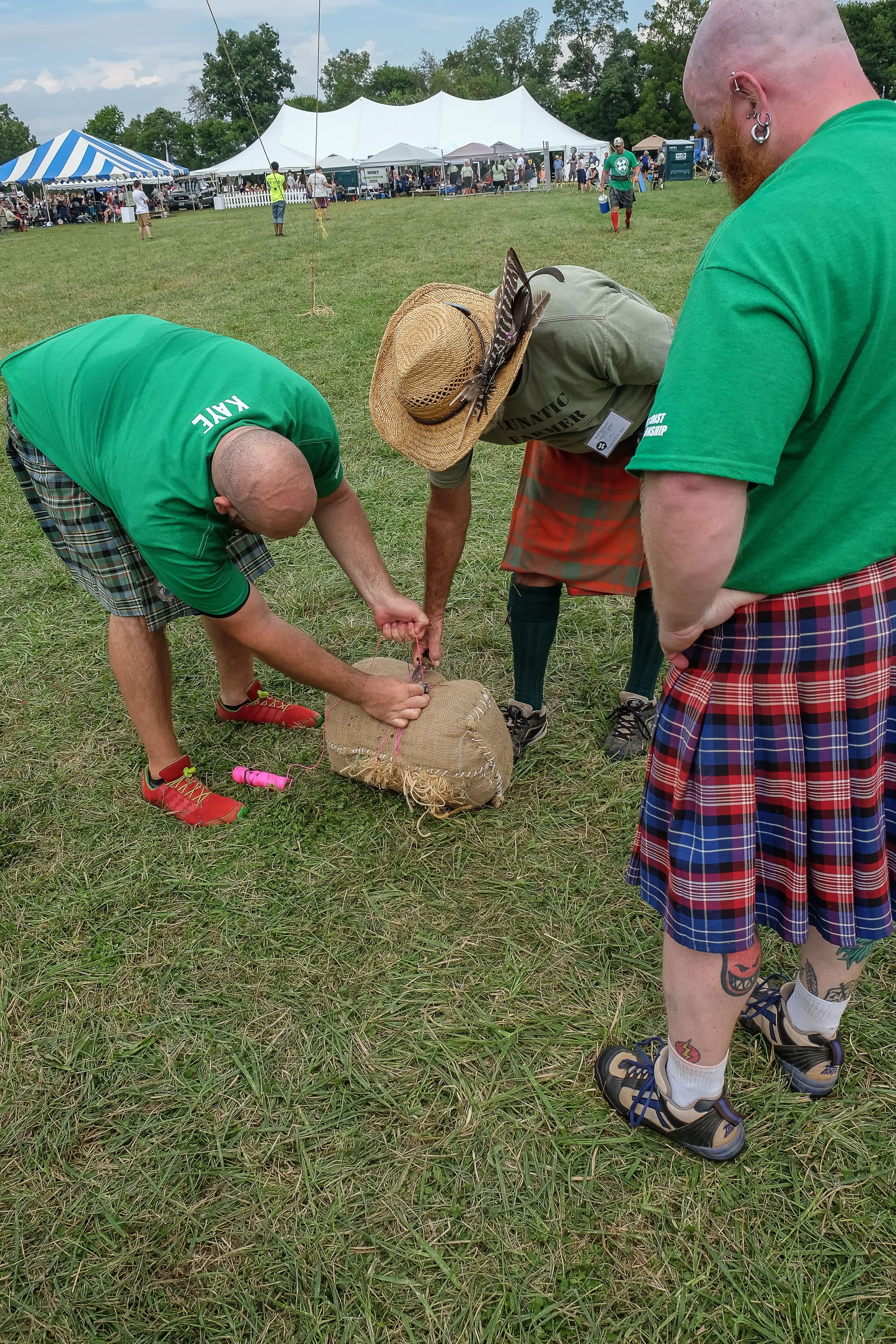
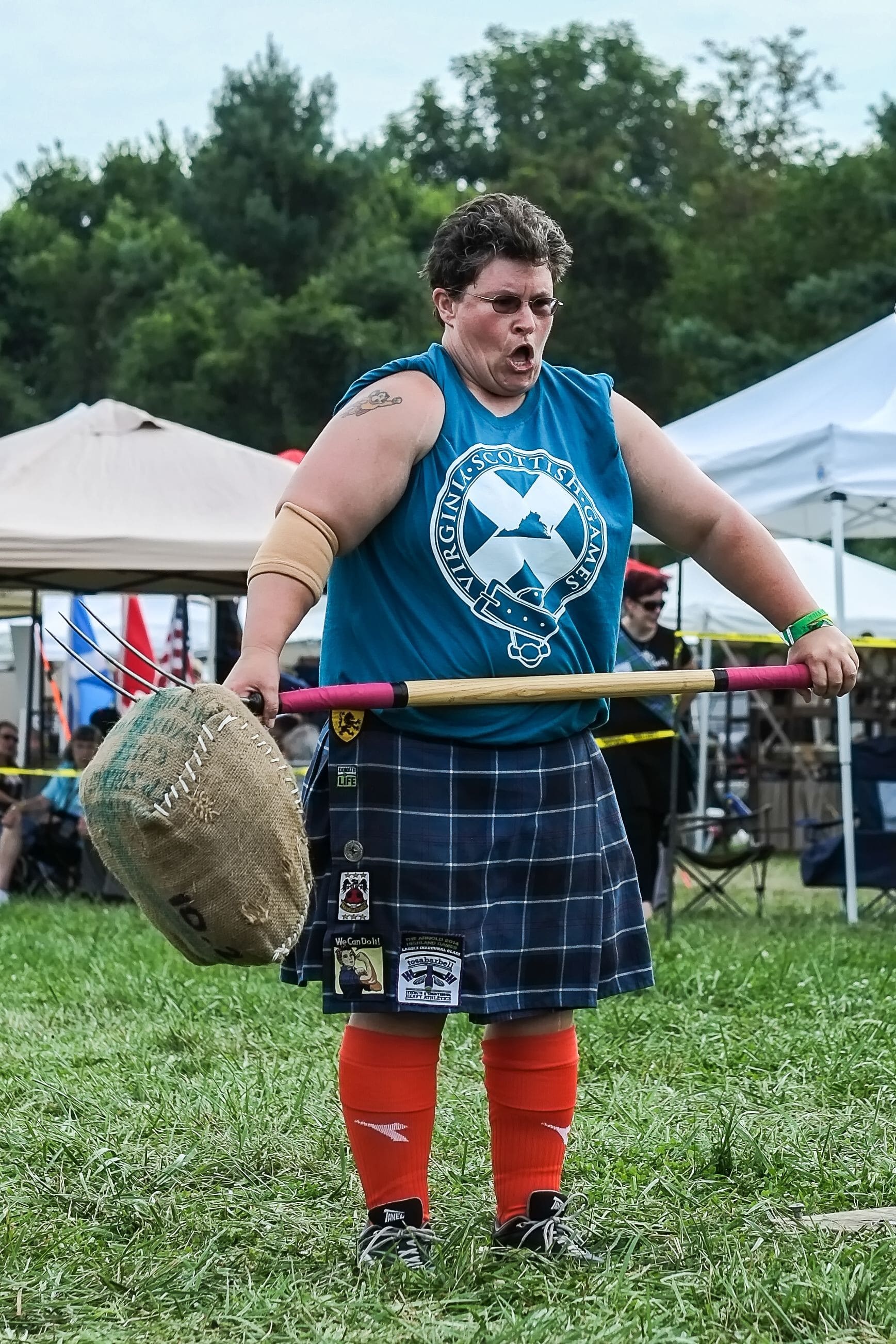
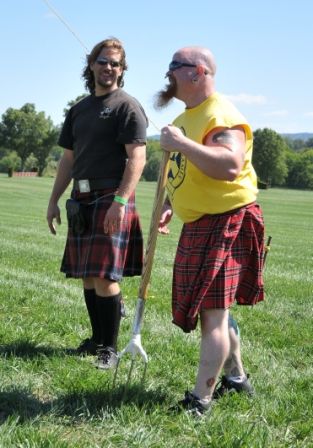
Sheaf Toss The sheaf toss originates from one of the most practical and common farm chores: Throwing sheaves of hay up into the barn loft. Traditionally contested at county agricultural fairs, and not thrown in Scotland, the sheaf toss has made its way into the Highland Games over the last 100 years, becoming a fan favorite along the way. Using a traditional 3-tyne hay fork, the athlete attempts to throw a burlap bag stuffed with materials such as straw or bailing twine over a horizontal bar. Each athlete gets three attempts at each increasing height until there is a winner, with misses being counted against them should two or more athletes tie at a height.
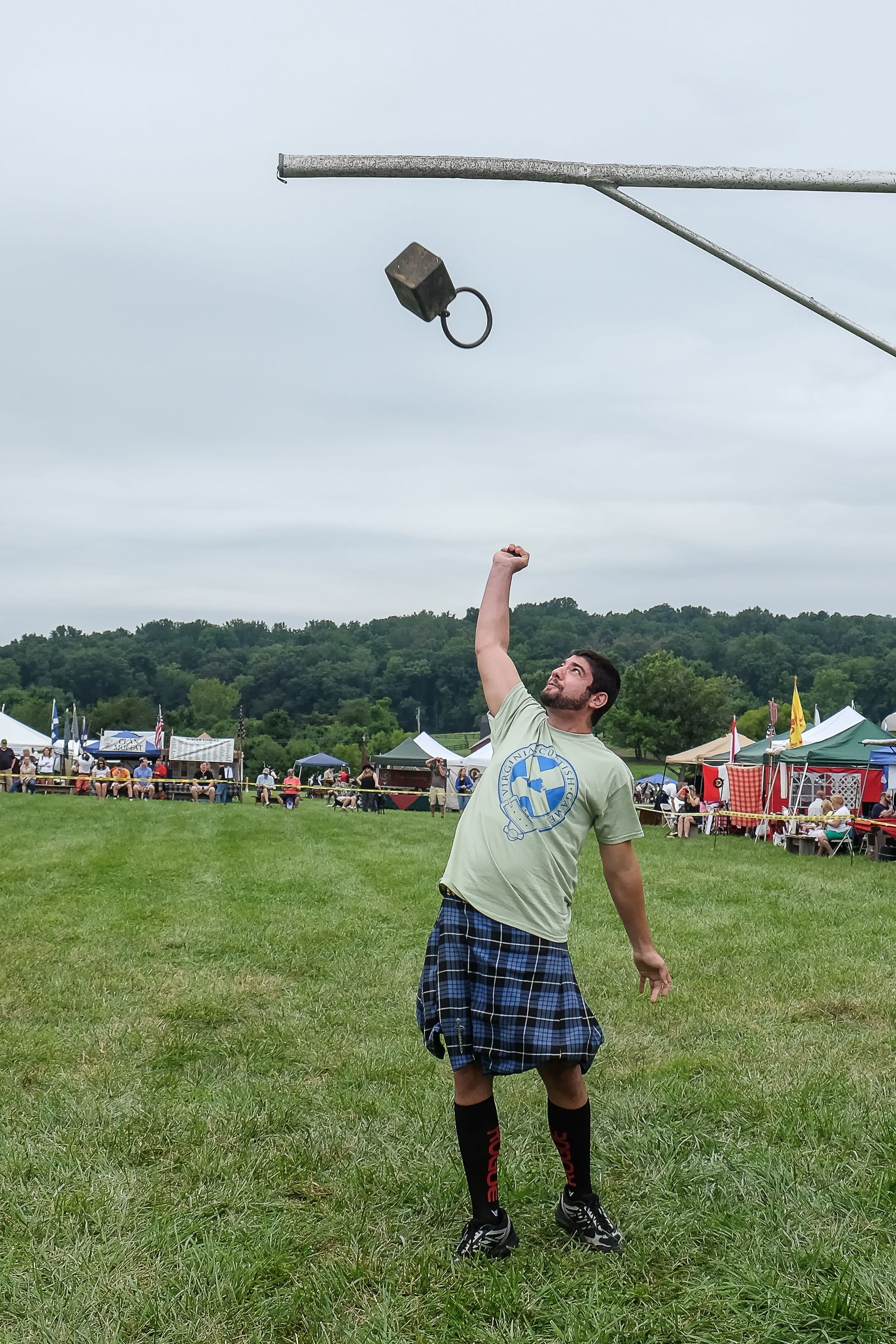
Weight Over Bar The standing Weight Over Bar, or weight for height as it is often called, is a tried-and-true test of brute strength and explosiveness. Originating from similar traditions as the weights tossed for distance, this is a staple event that is also often contested in strongman contests. The rules are minimal, simply stand under a horizontal bar and throw a 56 lb. weight over it with one hand. A running or spinning approach is allowed at the discretion of the field judge. Each athlete gets three attempts at each increasing height until there is a winner, with misses being counted against them should two or more athletes tie at a height.